
 Libbie Stevens | Visa Advisor, Wilmer Health | Published: 7 May 2026
This guide is for informational purposes only and reflects requirements as understood in 2026. Visa requirements can vary by consulate and are subject to change. Always confirm specific requirements with the Spanish consulate or immigration authority handling your application. For specific advice about your individual application, contact us at hello@wilmerhealth.com.
Having your ACRO certificate rejected as part of a Spanish visa application is frustrating — especially when you have already spent time and money getting it sorted. But it happens more often than you might think, and in almost every case the reason comes down to something specific and fixable.
This guide covers the most common reasons ACRO certificates are rejected for Spanish visa applications, what to do if it has happened to you, and how to make sure it does not happen again. If you want to check your documents before you submit rather than after, our 2026 ACRO certificate requirements checklist is a good place to start.
For a complete overview of the ACRO certificate and what is required for a Spanish visa, see our complete UK guide to the ACRO certificate for a Spanish visa.
This is the most common reason ACRO certificates are rejected, and it is entirely avoidable with a bit of planning.
Spanish consulates require your ACRO certificate to have been issued within the six months prior to your visa application submission date. There is no printed expiry date on the certificate itself, but consulates check the issue date carefully — and if it is even a day outside the six-month window, it will not be accepted.
This catches people out in a few ways. Sometimes the certificate was obtained early, before a consulate appointment had been confirmed, and by the time the appointment comes around the six months have passed. Other times the apostille process took longer than expected and pushed the submission date beyond the window.
How to fix it: If your certificate has lapsed, you will need to apply for a new one. There is no way around this — a new certificate with a current issue date is the only solution. If timing is tight, a premium ACRO service is the faster route. Our guide to how to get an ACRO certificate for a Spanish visa covers your options.
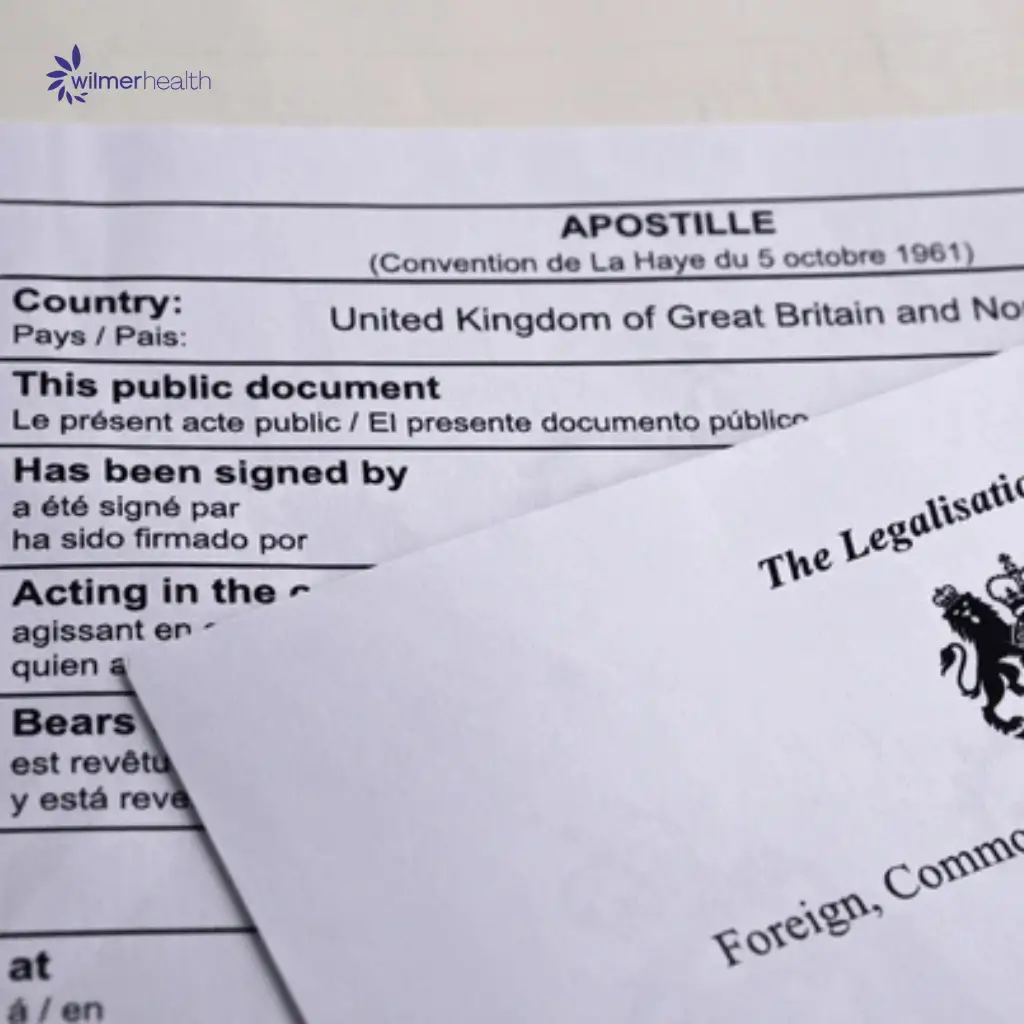
For your ACRO certificate to be accepted by a Spanish consulate, it must carry a UK Hague Apostille issued by the Foreign, Commonwealth and Development Office (FCDO). Without it, the consulate has no way to verify that the document is a genuine UK public document, and it will be rejected.
Some applicants are simply not aware the apostille is required — particularly those who have gone through the process of obtaining the ACRO certificate themselves and assumed that was sufficient. Others are aware but run out of time and submit without it hoping it will be overlooked. It will not be.
How to fix it: If your certificate does not have an apostille, it needs to go to the FCDO before you resubmit. Wilmer Health can arrange the apostille for your existing certificate without you needing to apply for a new one — as long as it is still within the six-month validity window. See our guide to whether your ACRO certificate needs an apostille for more on the process.
If you are applying for certain Spanish visa routes or submitting documentation to Spanish immigration authorities outside the UK, your apostilled ACRO certificate may also need to be accompanied by a sworn translation (traducción jurada) into Spanish.
A sworn translation is not the same as a standard certified translation, and it is not something any bilingual professional can provide. It must be completed by a translator officially accredited by the Spanish Ministry of Foreign Affairs. Submitting a standard translation — however professional it looks — will not meet the requirement.
How to fix it: If you have submitted the wrong type of translation or no translation at all, Wilmer Health can arrange a sworn translation for your existing apostilled certificate. See our guide to whether you need a sworn translation for your ACRO certificate for more detail on when this requirement applies.
This one is particularly frustrating because the mistake happens right at the beginning of the process — when you fill in your ACRO application — and you may not notice it until the certificate arrives.
Common errors include misspelled names, incorrect dates of birth, and inaccurate address history. Sometimes it is a typo, sometimes a name has been entered differently to how it appears on a passport, and sometimes address history has gaps or errors that affect what the certificate shows.
If the details on your ACRO certificate do not match your passport or other visa documents, the consulate may reject it — or at the very least query it, which causes delays.
How to fix it: Unfortunately, if the details on your certificate are wrong, you will need to apply for a new one with the correct information. There is no way to amend an issued certificate. This is why it is so important to double check every detail — particularly your full name as it appears on your passport and your complete address history — before you submit your ACRO application.
When you apply through Wilmer Health, we review your details before submitting your application to ACRO, which significantly reduces the risk of errors making it through to your certificate.

Submitting a DBS check instead of an ACRO Police Certificate is one of the most common document errors in Spanish visa applications. A DBS check will be rejected by every Spanish consulate regardless of what it shows or how recently it was issued — it is simply not the document Spain requires.
How to fix it: You will need to obtain the correct document — the ACRO International Police Certificate. Our guide to ACRO vs DBS for a Spanish visa explains exactly why only the ACRO is accepted and what you need to do next.
If your ACRO certificate has already been rejected as part of a Spanish visa application, the first step is working out exactly why. Consulates will usually indicate the reason for rejection, so read any correspondence carefully.
Once you know what the issue is, the fix will fall into one of three categories:
You need a new ACRO certificate — if the certificate has lapsed, contains incorrect details, or is the wrong document type. Wilmer Health can obtain a new certificate on your behalf and have it apostilled and ready within 12 working days.
You need an apostille on your existing certificate — if the certificate is still within the six-month validity window but was submitted without an apostille. Wilmer Health can arrange this for your existing certificate without you needing to start from scratch.
You need a sworn translation — if the translation requirement applies to your route and you either did not include one or used the wrong type. Again, Wilmer Health can arrange this for your existing apostilled certificate.
In all cases, contact us and we will advise you on the fastest route to getting your documents in order.

The best way to deal with a rejected ACRO certificate is to make sure it never happens. Before you submit your Spanish visa application, run through our 2026 ACRO certificate requirements checklist — it covers every condition your documents need to meet and takes just a few minutes to work through.
If you would rather have the whole process managed for you from the start, Wilmer Health’s fully managed ACRO certificate service handles the application, apostille and delivery for £345 — with a review of your details before anything is submitted to ACRO, reducing the risk of errors from the outset.