
 By Dr Andrew Smith | Medical Director, Wilmer Health | Published: 20 April 2025 | Last Update: 26 April 2026
This guide is reviewed regularly to reflect current Spanish consulate requirements. Last updated April 2026 by Dr Andrew Smith, Medical Director, Wilmer Health. For specific advice about your individual application, contact us at hello@wilmerhealth.com.
You’ve got your medical certificate. The next step — before you can submit it to the Spanish consulate — is getting it apostilled. It sounds more complicated than it is, but there are a few things worth knowing before you start, including one common mistake that catches a lot of people out.
This guide is written for UK applicants. If you’re applying from the USA or elsewhere, the apostille requirement works differently — drop us a message at hello@wilmerhealth.com and we’ll point you in the right direction.
For the full picture on the medical certificate process, read our complete guide — Spanish Visa Medical Certificate in the UK: Everything You Need to Know (2026).
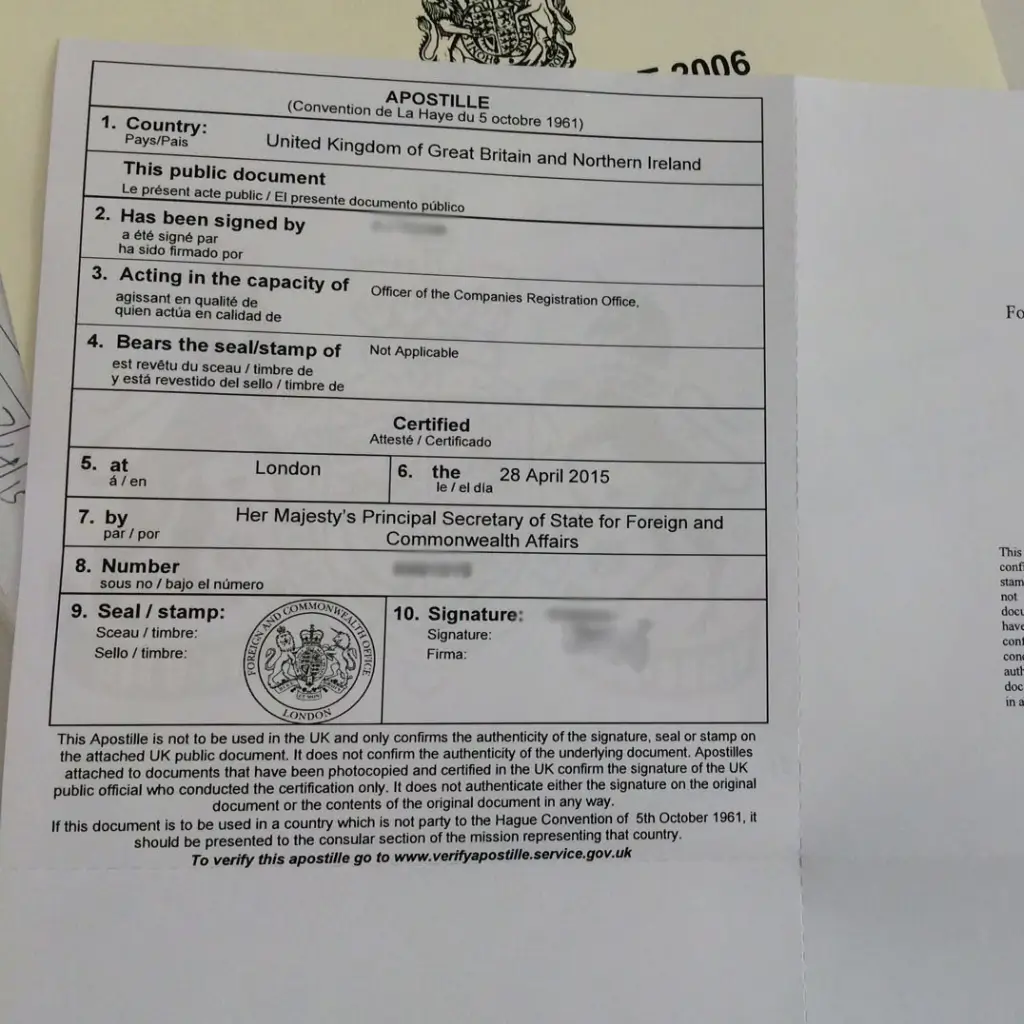
An apostille is an official stamp from the UK government that makes your UK-issued medical certificate legally recognised in Spain. Spain is part of the Hague Apostille Convention — a group of countries that agree to recognise each other’s official documents when they carry this stamp.
Think of it as the UK government confirming three things to the Spanish consulate:
Without an apostille, the Spanish consulate won’t accept your certificate regardless of how well it’s been prepared. It’s not optional, and there are no exceptions for UK applicants.
In the UK, apostilles are issued by the Foreign, Commonwealth & Development Office — the FCDO.
Yes — for UK applicants, an apostille is always required for your Spanish visa medical certificate. This applies regardless of which visa type you’re applying for — Non-Lucrative, Student, Digital Nomad, Work, or Family Reunification. Read our full guide on Spanish visa medical certificate requirements for the complete checklist of what your certificate needs before submission.
Yes — and this is where a lot of people run into problems.
For the FCDO to apply an apostille, they need to be able to verify the signature on your certificate. They do this by checking their register of recognised doctor signatures. If your doctor isn’t on that register, the FCDO can’t verify the signature — and the apostille application fails.
When this happens, you need a notary public to certify the doctor’s signature first, before the FCDO can even consider the apostille. That adds an extra step, extra cost, and extra time — none of which you want when you’re working to a visa deadline.
The simplest way to avoid this is to use a provider whose doctors are already FCDO-registered from the start. At Wilmer Health, all our doctors are GMC-registered and FCDO-verified — so the apostille process is straightforward, with no notarisation step needed.
Most NHS GPs are not FCDO-registered, which is one of the main reasons we advise against the NHS route for this. Read our guide on getting a Spanish visa medical certificate through the NHS for more detail.
No. Only the original physical copy with a wet ink signature can be apostilled. The FCDO will not process scanned copies, photocopies, or digital versions. This is why the original document needs to be posted to the FCDO — or to a legalisation service acting on your behalf — and why the whole process takes time.
Make sure you don’t send your only copy anywhere without keeping track of it. If you’re using Wilmer Health, we handle the physical document on your behalf and track it throughout the process.
Your medical certificate must have been issued within the last 90 days at the point of submission to the Spanish consulate — not at the point of apostille. The apostille itself doesn’t expire, but the certificate it’s attached to does.
This is why timing matters. If you get your certificate apostilled but then your consulate appointment gets pushed back past the 90-day window, the certificate will no longer be valid — even with the apostille on it. You’d need a new certificate, a new apostille, and a new translation.
You have three main routes:
Apply directly through the FCDO: You can submit your certificate to the FCDO yourself via their online portal. The FCDO charge around £50 per document — so that’s the minimum cost if you go direct. However, the standard FCDO route often takes much longer than people expect, with no guaranteed turnaround time. During busy periods, delays are common. If your consulate appointment is coming up, this route carries real timing risk.
Use a solicitor or legalisation service: Some solicitors and specialist legalisation services handle apostilles on your behalf. This typically costs more than going direct but can be faster. Turnaround times vary — always confirm before committing, and make sure they understand the specific requirements for Spanish visa documents.
Use Wilmer Health: Our apostille specialists have direct access to the FCDO counter in Milton Keynes. This is why we can offer guaranteed turnaround times — 4, 5, or 10 working days — that the standard FCDO route simply can’t match. When you order an apostille through Wilmer Health, you know exactly when it’s coming back. And if you’re getting your certificate through us at the same time, everything is handled in one process — certificate, apostille, and translation all arriving together, in the right order, ready to submit.
The FCDO charge around £50 per apostille as their base fee — so that’s the minimum you’ll pay if you go direct. Additional costs apply if you use a legalisation service on top.
At Wilmer Health, the apostille is included in our combined packages:
For a full breakdown of all costs, read our guide on how much a Spanish visa medical certificate costs in the UK.

It might be tempting to assume the consulate will accept your certificate without it — especially if everything else looks official. They won’t. Here’s what happens if you submit without an apostille:
Some applicants only find out there’s a problem on the day of their appointment. Don’t let that be you.
If your doctor wasn’t FCDO-registered — you’ll need notarisation before the apostille can be applied. This adds time and cost. If the certificate has also expired by the time you realise, you’ll need to start again entirely.
If the apostille was applied but the certificate was still rejected — check the rejection reason carefully. It may be a wording issue rather than an apostille issue, in which case our guide on why Spanish visa medical certificates get rejected will help you work out what to do next.
Getting the apostille right is one of the most important steps in your Spanish visa application — and one of the easiest to get wrong if you’re not using the right provider from the start.
At Wilmer Health, our doctors are FCDO-verified, our apostille specialists have direct counter access at the FCDO in Milton Keynes, and everything is handled in one process. You don’t need to coordinate three different providers or worry about getting the order wrong.
Everything is done online, and we’re on hand seven days a week. Got a question before you apply? Drop us a message at hello@wilmerhealth.com — we’re always happy to help.