
 By Dr Andrew Smith | Medical Director, Wilmer Health | Published: 11 April 2025 | Last Update: 20 April 2026
This guide is reviewed regularly to reflect current Spanish consulate requirements. Last updated April 2026 by Dr Andrew Smith, Medical Director, Wilmer Health. For specific advice about your individual application, contact us at hello@wilmerhealth.com.
You’ve got your university place, your accommodation sorted, and a very long packing list you’re trying not to think about. The last thing you want is to get bogged down in visa paperwork — but here you are, wondering what on earth a Spanish visa medical certificate is and whether you actually need one.
Good news: it’s not as complicated as it sounds. This guide covers everything specific to students applying for a Spanish visa from the UK — what the medical certificate is, whether your situation requires one, and how to get it sorted quickly without it taking over your life.
For the full detail on how the medical certificate works in general, head to our complete guide — Spanish Visa Medical Certificate in the UK: Everything You Need to Know (2026). This page focuses specifically on what’s relevant to you as a student.
Yes — regardless of what you’re studying or where, a medical certificate is a standard requirement for any Spanish student visa application from the UK. That includes:
The 90-day rule is the key threshold. If your programme is 90 days or under and you’re a UK passport holder, you may not need a student visa at all — in which case the medical certificate isn’t required either. If you’re staying longer than 90 days, you will need both.

No — and this is worth saying clearly because a lot of students assume there’s a special student version. There isn’t. The certificate you need is exactly the same as the one required for any other Spanish long-stay visa. Same wording, same format, same doctor requirements.
The only thing that changes is the context around it — the other documents in your application, the financial requirements, and the consulate process. But the medical certificate itself is identical.
So if you’ve been reading general guides about the Spanish visa medical certificate, everything there applies to you.
Same requirements as any Spanish visa medical certificate — the correct IHR 2005 wording, issued by a GMC-registered doctor, wet ink signature, official stamp, and headed paper.
We’ve covered this in detail in our guide on what your Spanish visa medical certificate should say — worth a read if you want the full breakdown. The short version: don’t try to get this from a doctor who isn’t familiar with the specific requirements, because incorrect wording is one of the most common reasons certificates get rejected.
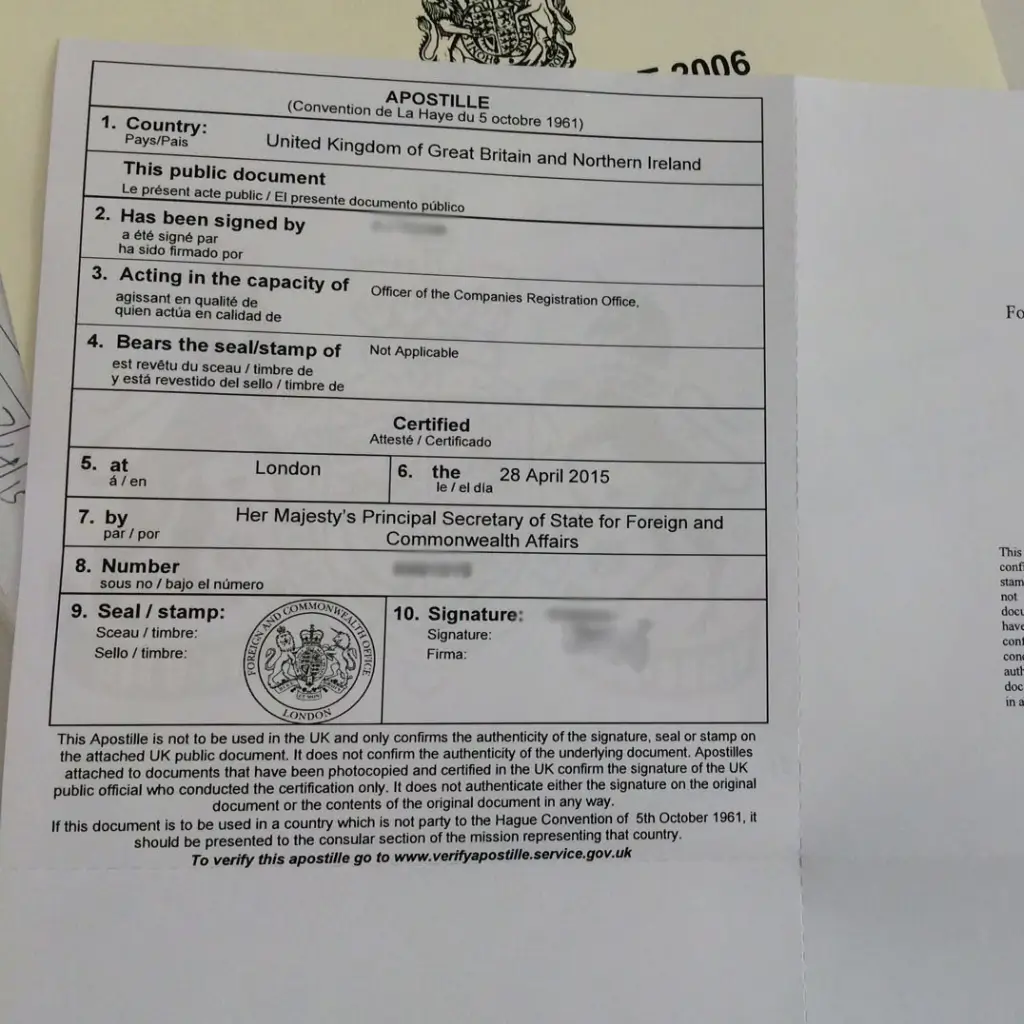
Yes, always. The apostille is the official FCDO stamp that makes your UK-issued certificate legally recognised in Spain. Without it, the consulate won’t accept the document.
Full detail on how to get one in our guide on how to get an apostille for your Spanish visa medical certificate.
Yes, if it’s issued in English — which it will be if you’re getting it from a UK doctor. It needs to be a sworn translation, done by a translator registered with the Spanish government.
One way to sidestep this entirely is to use a provider that issues bilingual certificates as standard. At Wilmer Health, your certificate comes in both English and Spanish — which means no separate translation, no extra wait, and typically a saving of £75 or more. For a student on a budget, that’s worth knowing.
Read more in our guide on getting your Spanish visa medical certificate translated in the UK.
Two questions students often ask:
Can my university sort it for me? No — universities don’t issue medical certificates. It’s not something your student services team or health centre can help with, even if they have an on-campus GP. The certificate needs to be issued by a doctor whose signature is FCDO-registered, and campus health services don’t operate in that way.
Can my NHS GP do it? Possibly, but it’s rarely straightforward. Most NHS GPs don’t offer this service, and even those who do are often not FCDO-registered — which creates an additional notarisation step that adds cost and time you probably don’t want. Our full guide on getting a Spanish visa medical certificate through the NHS explains the full picture.
The simplest route for most students is an online specialist provider — fast, done entirely from your laptop, and designed around the exact requirements Spanish consulates ask for.
This is where being a student adds a specific wrinkle. Unlike someone applying for an NLV who can be relatively flexible about timing, students often have fixed term start dates and BLS appointment windows that don’t move.
A few things to factor in:
As a general rule, aim to get your medical certificate four to six weeks before your BLS appointment. That gives you enough buffer without the risk of it expiring before you submit.
At Wilmer Health, we offer a few options depending on your timeline:
No hidden extras. Read our full guide on how much a Spanish visa medical certificate costs in the UK for a broader comparison.
We know you’ve got enough on your plate — sorting accommodation, packing, saying goodbye to everyone, and probably panicking about your Spanish. The medical certificate shouldn’t be the thing that holds you up.
At Wilmer Health, the whole process is online. You fill in a short medical history form, one of our GMC-registered, FCDO-verified doctors reviews it, and your certificate is issued and posted to your UK address. We issue in bilingual format as standard, and we can handle the apostille in the same process — so you’re not chasing multiple providers while also trying to sort the rest of your life out.
Most students tell us it was quicker and simpler than they expected. Which is exactly how it should be.